Wednesday, 25 April 2012

Sweat it out


     In my personal opinion, one if the best things you can do for your skin to achieve that "healthy glow" that everyone strives for, is sweat it out! Sweat at least once a day! I releases toxins built up in your body that could be contributing to potential skin conditions like acne, congestion and even eczema. Be sure you have a face cloth or towel within reach to blot off (not wipe) your skin as you want to avoid reabsorption of toxins. During facials we use steam to promote a more intense exfoliation. This allows for a more effective use of the exfoliant being applied (in most cases) and steam induces sweating which opens your pores for a better cleanse and easy extractions. 

     Whether you go for a steam, infrared sauna, run, yoga, whatever way you choose to "sweat it out", be sure to cleanse your skin afterwards. One of the biggest contributions to breakout activity (particularity back and chest acne) is sitting in your own sweat. What I mean by this is wearing your damp sweaty clothes or not cleansing your face after a good work out kind of defeats the purpose of detoxing your skin. All those toxin you worked so hard to sweat out are now just sitting on the surface and getting reabsorbed back into the epidermis...and that alone can make you more susceptible to breakout and let's not forget to mention prickly rash or heat rash (pesky little red, irritating bumps). 

    Be sure that you are still exfoliating your skin 1 - 2 times a weeks as you would normally do because we all know that when you refine your skin you get that really nice, even texture complete with a radiant, youthful glow. Through on some mineral make-up for your Sun protection and voilĂ .


Saturday, 31 March 2012

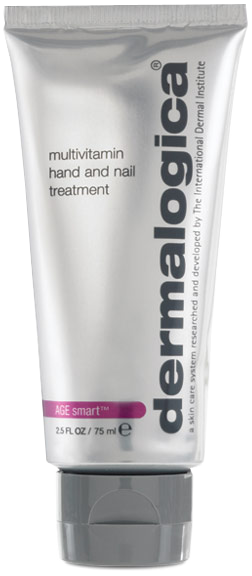
Product Profile: Multivitamin Hand and Nail Treatment

     For those of you who know me, you know that in my profession I'm constantly handling very powerful products and always washing my hands. Now with nursing school, my hands are taking even more of a beating. I've developed pretty bad eczema on my hands and have tried treating it with all kinds of lotions and potions prescribed by the doctor. It wasn't until recently that I decided to take the matter into my own hands (literally) and find something that works.

    I've worked with Dermalogica's skin care products for about 6 years now and I don't know why it didn't even occur to me to try their multivitamin hand and nail treatment. It's part of their AgeSmart line (for a mature skin) so I just never thought that I would benefit from it, until now.

    It has to be HANDSDOWN my favourite  hand cream. My eczema has totally cleared up and my hands even look younger! No Joke!! It's an intense, non-greasy treatment of botanicals and vitamins to protect and repair and it strengthens nails, preventing them from splitting or peeling.


It runs at about 24$ but worth every cent. A little goes a LONG way :)

Wednesday, 14 March 2012

Makeup Tips

I've been receiving a lot of questions about any tips and tricks regarding makeup lately so I thought I'd write them down :)

First and foremost in order to achieve a nice make up application, it starts with good skin care. Cleansing, exfoliating, and moisturizing for sure...anything else is an added bonus. When skin is freshly exfoliated it evens out the texture creating an ideal canvas.

Foundations:

Liquid/Creme - for those who are looking for a bit of a heavier coverage (or maybe use before going out or a special event) *Note: always set a liquid foundation with a powder for it to last all day
Pressed Powder - Light, Medium or Heavy coverage depending on application. The denser the brush, the heavier the application. Use a fluffy powder brush for a lighter application.
Loose Powder - Great for setting liquid foundation. Sheer, Light to medium coverage depending on application. Great for just evening out skin tone especially in the summertime.
Tinted moisturizer - self explanatory (sheer to light coverage)

Blush:

I'm a fan of powdered blush not creme...although creme works for some people. Just whenever you put a creme on your face you want to 'set' it with a powder. Please make sure your blush is blended properly! Hate seeing 80's style 'racing stripes' on your cheeks ;)

Here is my favourite blending brush:


Bronzer:

Traditionally used in the contours of your cheeks and in your hairline, particularly around the temples. Supposed to define your bone structure. With all the shimmers and stuff added to bronzers these days...it's better to me applied on your cheeks like a blush and a little on your nose and forehead to create an artificial health tan ;) Apply with a large powder brush


Eyeshadow:

If you have oily eyelids you are going to want to avoid using creme eyeshadow. Oily eyelids will benefit from using a primer and then using powder eyeshadow to set it.

I always like to use a base on my eyes first (like a foundation or a creme) so that the pigment of my powder has something to stick to. It also allows for it to last longer throughout the day (or night).

Use a dense eyeshadow brush to deposit stronger pigment:


To blend out you eyeshadow...use a blender brush and a pigment thats a few shades light than that of the one you used on your lids:


For gel or cake (liquid) liner:


And to apply to your lower lash line a mini shader brush:


Lips:

If using a lip liner, be sure you blend it all over your lips, don't just line them and then apply your lipstick or lipgloss. This prevents that awkward moment when your lipstick wears off and all you have left is the lipliner...

Friday, 9 March 2012

Getting through the skin

The skin is divided into three layers:
1.) Epidermis (Stratum Germinativum, Stratum Spinosum, Stratum Granulosum, Stratum Corneum)
2.) Dermis
3.) Hypodermis

The epidermis consists of stratified epithelial cell layers
The Dermis is made up primarily of collagen and elastin connective tissue
The Hypodermis is made up mostly of fat and blood vessels


Getting through the skin...

Cleansing cleans dirt, oils and other environmental pollutants off the outer most layer of the skin.
Toning hydrates and rebalances pH levels of the outer layer of the skin.
Exfoliation contributes into the shedding of the outer stratum corneum revealing a more radiant skin.
Masques and serums penetrate through the cells (transcellular) and through the lipid barrier (intracellular)
Enhanced penetration occurs when: skin is hydrated, lipid barrier is disrupted, stratum corneum exfoliation, chemical solvents used (i.e. alcohol), agents that soften keratin protein or other electricals (i.e. galvanic, high frequency, etc).
Moisturizers hydrate and push nutrients into the skin.

Professional products are structured more effectively making them more efficient in entering the skin.

Improve your skin health with:
- exfoliation
- hydrating ingredients like hyaluronic acid, honey, aloe vera and algae
- emollients to help reduce transepidermal water loss e.g.Silicones, Evening primrose, borage seed oil.

Monday, 13 February 2012

The Skin

I just attended a Dermalogica class tonight and it got me all excited about skin again. I often forget that as a consumer, you don't always understand what we are talking about and I just assume it's common knowledge. My apologies.

Here is a little science behind skin: 

Functions: Protection, sensation, heat regulation, storage and synthesis, excretion, absorption and water resistance. 

The skin is composed of 3 parts:
1.) Epidermis: Stratum Germinativum, Stratum Spinosum, Stratum, Granulosm, and Stratum Corneum. 
2.) Dermis
3.) Subcutis (Hypodermis)

     The Epidermis is the dead outer layer of skin. During facials we exfoliate this skin to create a nice smooth, refined texture as well as allow for better product penetration. This also encourages cellular turn over of new healthy cells which help to maintain your natural moisture barrier. 

     Between the Epidermis and the Dermis we have the dermal-epidermal junction. This supports and maintains the structure of the skin (adheres the dermis to the epidermis).  This is where our cells are produced and divide. One cell stays behind to go through mitosis while the other cell gets pushed up towards the skins surface. This process (called desquamation) usually take 28 - 50+ days. The younger we are, the faster the process. As we reach middle age our desquamation rate slows down dramatically. We need products such as exfoliants to help speed it up. 

     Our dermis is mainly composed of connective tissue: elastin fibres, collagen, capillaries, sweat glands, sebaceous glands and hair follicles. This portion of your skin is what gives it volume and tone. 

     The subcutis (or hypodermis) is not actually part of your skin but acts more of a cushion to protect it. Composed mainly of loose connective tissue and elastin (contains 50% of body fat).  Its purpose is to attach the skin to the underlying bone and muscle. 

Permeability is the ability for substances to penetrate or diffuse through the skin. 

I will write a new blog soon on which products penetrate to which layers of the skin and their effects :) 

Stay tuned...


Thursday, 2 February 2012

The 3 worst things you can do for your skin:

1.) Tanning - UV exposure slowly destroys the integrity of the skin's structure but you won't see the effects until later on in life. UVA and UVB rays breakdown collagen and elastin which is what gives your skin volume. Loss of volume contributes to loose, sagging skin & wrinkles.  Sun worshipers often end up with thicker, leathery skin (and lets not forget to mention their susceptibility to skin cancers) so be sure to wear your SPF daily, especially on your face :)

2.) Smoking cigarettes - This is straight up polluting your skin. Smoking causes narrowing of blood vessels and impaired blood flow to your skin can lead to a multitude of problems. Less oxygen and nutrients are able to reach it, the breakdown of collagen and elastin cause skin to sag and wrinkle, and smoking reduces antioxidants in your skin which play a vital role in fighting free radical damage.

3.) Using Soap instead of cleanser - You've heard it from me before and I'll tell you again... Soap is terrible for your skin! It strips your skin of it's natural moisture barrier (acid mantle) causing it to work overtime to try and replenish the lost oils. Soap has a fairly high pH, meaning it is slightly alkaline and alkaline skin creates a perfect breading ground for bacteria which can lead to pimples. Using a cleanser that is suited for your skin type will help to maintain homeostasis and decrease your potential for breakout and irritation.